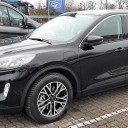
Ein Jahr weiter und wieder neuer Rückruf, auch für 24S79/24V954?!
https://www.nhtsa.gov/?nhtsaId=25V789000
https://static.nhtsa.gov/odi/rcl/2025/RCLRPT-25V789-2536.pdf
Description of the defect or noncompliance:
The vehicle’s high voltage battery cells may experience internal short circuiting. This population of
vehicles was previously recalled under 24V954 /24S79 to address this risk. The 24V954 remedy
updated the vehicle’s Battery Energy Control Module (BECM) software, adding an enhanced capability
to detect cell anomalies indicative of conditions that may lead to short circuiting. In the event of
anomaly detection, the software provides customer notification, and battery charging is stopped to
reduce the risk of shorting. Based on new information, the recall remedy for 24V954/24S79 may not
detect these conditions in all cases
Auch in Europa:
Beginning in August 2025, the investigation team recovered the battery energy control modules (BECM)
and battery packs post-venting occurrence for the cited above. The team was unable to determine a root
cause of venting from inspection of cells recovered from the five vehicles due to thermal damage. BECM
data, available for 2 of the vehicles, showed that no cell anomalies were present prior to venting that
would have triggered the 24V954/24S79 remedy software mitigation strategy.
Beginning in October 2025, teardown analysis of cells from battery packs replaced under a companion
customer s-a-t-i-s-faction program to 24V954/24S79 has been ongoing but to date has not yielded further
root cause information. These packs had cell anomalies detected that triggered the remedy software
mitigation strategy and did not experience venting.
As of November 5th, 2025, Ford is aware of seven cases of battery cell venting on vehicles with the
remedy software, all on Kuga PHEV vehicles in Europe.
On November 7th 2025, Ford’s Field Review Committee reviewed the concern and approved a field
action.
Ford is not aware of any accidents or injuries related to this issue.